Pizza in Naples
The UNESCO-recognised art of the pizzaiuolo, the classic types, how the pizza is made and pizza fritta.
Pizza is part of the identity of Naples. In 2017 UNESCO added the art of the Neapolitan pizzaiuolo to the Representative List of the Intangible Cultural Heritage of Humanity. The Associazione Verace Pizza Napoletana (AVPN) publishes the rules for the pizza that carries its trade mark, and this page follows both sources.
The art of the pizzaiuolo
UNESCO describes four phases that cover the preparation of the dough and its baking in a wood-fired oven, with a rotating movement by the baker. It names three categories of practitioners (the master pizzaiuolo, the pizzaiuolo and the baker) and also the families in Naples who practise the art at home. The pizzaiuolo is at the centre of the bottega, where the craft is shared. UNESCO notes that about 3,000 pizzaiuoli work in Naples, and that knowledge is passed on mainly through apprenticeship.
Margherita
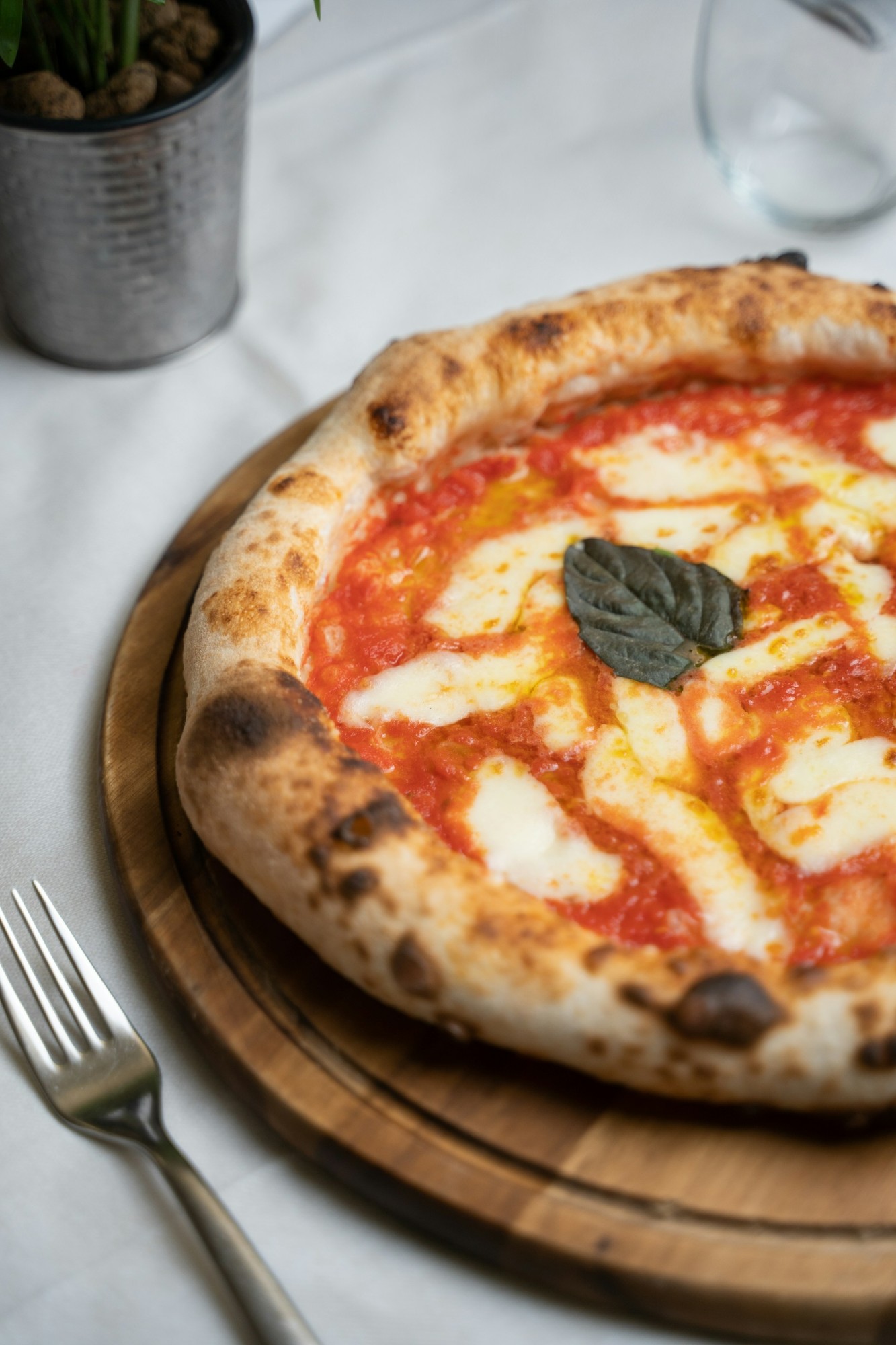
The AVPN rules name the Margherita, together with the Marinara, first among the pizzas historically most common with its method. The Margherita is made with tomato, oil, mozzarella or fior di latte, grated cheese and basil.
Marinara
The Marinara is made with tomato, oil, oregano and garlic.
Quattro stagioni, capricciosa and calzone
The AVPN rules say that, historically, the most common pizzas made with this method were the marinara, the margherita, the quattro stagioni, the capricciosa and the calzone (ripieno), all baked in an oven.
Pizza fritta
Pizza fritta is cooked in hot oil instead of baked, and Italian food guides list it among the street foods of Naples. According to the AVPN rules, the dough is rolled out by hand to about 2-3 mm and shaped either as a half-moon closed on itself (calzone fritto) or as a round (tonda fritta).
Ruota 'e carretto
The AVPN rules describe the "rota 'e carretto" (cartwheel pizza) as a traditional variant: thinner, with a less pronounced crust, and so generous in size that the edge comes out of the plate. According to the rules, it was born in the neighbourhoods of Naples, in the streets of the Decumani.
How a Neapolitan pizza is made
These points come from the current AVPN rules. They describe the pizza that can carry the trade mark "Verace Pizza Napoletana", which is a collective trade mark of the association. The association checks its members and accepts members in any country.
Flour, water, salt and yeast
The rules say to start with the water and to never add fat or sugar to the dough. The dough is made by hand or in a mixer, and it is left to rise before it is portioned into balls.
By hand
The disc is opened with the fingers of both hands. The rules do not allow a rolling pin or a mechanical press for the true Neapolitan pizza.
A raised edge and a thin centre
The finished pizza is a roundish disc with a raised edge, the cornicione, of about 1-2 cm, and a centre of about 0.25 cm covered with toppings. The rules describe it as soft and elastic, easy to fold.
Directly on the oven floor
The pizza is baked directly on the oven surface, not on a tray. Traditionally this meant a wood-fired oven; the current rules also allow gas or electric ovens that meet the association's parameters. Baking should not exceed 60-90 seconds.
Eaten straight away
The rules say the pizza should be eaten as soon as it comes out of the oven, preferably within 10 minutes in the pizzeria.
Menus, prices and opening hours change, so check each place's official website or listing before you go. The AVPN publishes its rules and member list at pizzanapoletana.org, and UNESCO's entry is at ich.unesco.org. The place of pizza fritta among Neapolitan street food comes from Italian food guides such as Dissapore and Gambero Rosso. For places to eat, see our food guide.
Frequently asked questions
Is Neapolitan pizza recognised by UNESCO?
The craft is. UNESCO recognised the art of the Neapolitan pizzaiuolo in 2017, on the Representative List of the Intangible Cultural Heritage of Humanity. It recognises the craft and the way it is practised, not a specific pizzeria.
What are the classic Neapolitan pizzas?
The AVPN rules name the marinara and the margherita first among the pizzas historically most common with its method, followed by the quattro stagioni, the capricciosa and the calzone.
What does "Verace Pizza Napoletana" mean?
It is a collective trade mark of the Associazione Verace Pizza Napoletana. A pizzeria that is a member follows the association's written rules for the dough, the shaping and the baking, and the association checks its members. Members can be in any country.
Is a Neapolitan pizza made with a rolling pin?
No. According to the AVPN rules, the dough is opened by hand, and a rolling pin or a mechanical press is not allowed for the true Neapolitan pizza.
How long is a Neapolitan pizza baked?
The AVPN rules say that baking should not exceed 60-90 seconds.
What is pizza fritta?
A pizza that is cooked in hot oil instead of baked, and one of the street foods of Naples. The AVPN rules describe it as a half-moon (calzone fritto) or a round (tonda fritta).
What is a rota 'e carretto?
The "rota 'e carretto" (cartwheel pizza) is a traditional variant described in the AVPN rules. It is thinner than the standard pizza, with a less pronounced crust, and it is so large that the edge comes out of the plate.
What to eat in Naples
The city of pizza has a lot more to offer than that.
Things to do in Naples
From museums and underground sites to views and walks.
Plan your days
See our plans for one, two and three days in Naples.